14 Apr 2026 • 10 min read
Best Mutual Funds for Short Term in 2026

Summary: The Quick Lowdown
- Short-duration mutual funds (1-3 years) offer high liquidity and target 6.5%-8.0% annualized returns, beating savings accounts.
- Under 2026 rules, all debt fund gains are Short-Term Capital Gains (STCG), taxed at your income slab rate.
- Ideal for stability seekers, taxpayers using Section 87A rebates, or businesses managing working capital.
- Safest portfolios prioritize Sovereign and AAA-rated corporate bonds, minimizing credit and interest rate risks.
Finding the Best Mutual Fund for Short Term in 2026
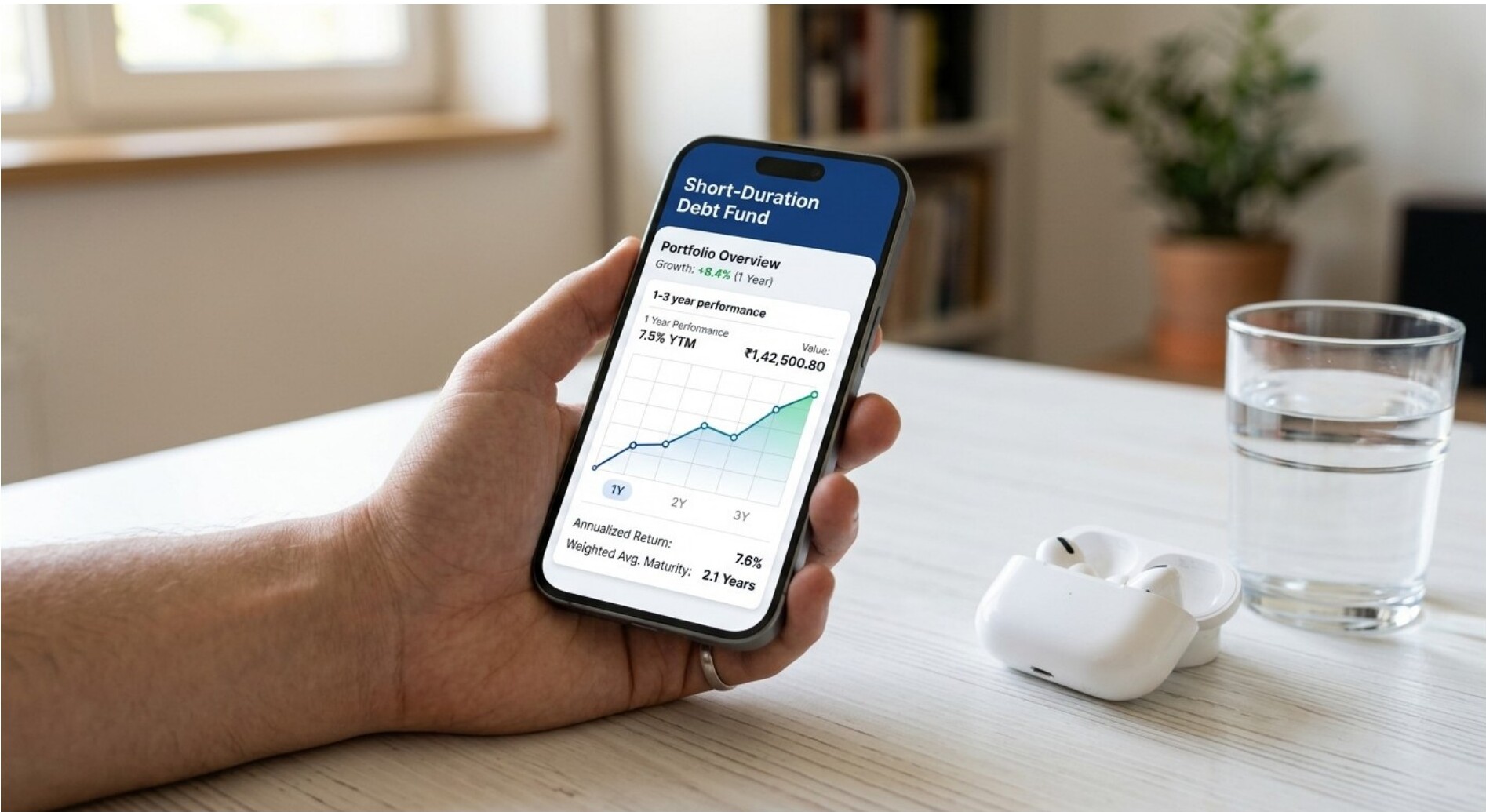
If you have ₹2–5 lakh sitting idle for the next 1–2 years, leaving it in a savings account at 3% means inflation is quietly eating into it. That's where short-term mutual funds come in.
They aim to deliver better returns than savings accounts while keeping your money accessible and relatively stable.
What Are Short-Duration Mutual Funds?
A short-duration mutual fund is a Debt Mutual Fund that lends money to the government or highly rated corporations for a one to three-year timeframe. Unlike volatile equity funds, these aim for steady income.
Decoding Macaulay Duration & Yield to Maturity (YTM)
You will frequently encounter Macaulay Duration. Think of it as pacing: if an overnight fund is a frantic T10 cricket match, a short-duration fund is a T20— providing a defined timeframe for returns. Another metric is Yield to Maturity (YTM), the expected annual return if bonds are held to maturity. In 2026, expect YTMs tracking short-term rates between 6.5% and 8.0%.
Better Liquidity Than Bank FDs
Unlike bank Fixed Deposits (FDs) that penalize early withdrawals, short-duration funds offer outstanding liquidity. You can redeem units within two business days. Most rarely charge an Exit Load (early withdrawal penalty), making them highly flexible.
How Taxation Works for Short-Term Funds in 2026
Recent tax regulation changes make tax planning indispensable.
The Section 50AA Rule (Flat Slab Rates)
Under 2026 rules, debt mutual fund profits fall under Section 50AA. Returns are treated exclusively as Short-Term Capital Gains (STCG). Profits are added to your annual income and taxed at your specific slab rate, regardless of holding period.
Maximizing the Section 87A Tax Rebate
Thanks to the expanded Section 87A rebate, individuals earning up to ₹12 lakh effectively pay zero income tax. In this bracket, your debt fund returns are practically tax-free.
Short-Duration vs. Arbitrage Funds
While short-duration funds offer predictable yields, investors in the 30% tax bracket might lose significant gains to taxes. For high-income earners, arbitrage funds—taxed favorably as equity investments—might be a more tax-efficient alternative.
Short Duration vs Liquid vs FD: Quick Comparison
| Feature | Short Duration Fund | Liquid Fund | Bank FD |
|---|---|---|---|
| Time Horizon | 1–3 years | 1–3 months | Fixed |
| Returns | 6.5–8% | 5.5–7% | 6–7.5% |
| Liquidity | High | Very High | Low (penalty) |
| Risk | Low | Very Low | Very Low |
| Tax | Slab | Slab | Slab |
Strategic Uses for Short-Term Funds

Deploying funds strategically is where real wealth-building happens.
Goal-Based Investing & Working Capital
If you need ₹5 lakh for college in two years, you cannot risk that capital in the stock market. A short-duration fund keeps your principal secure while growing steadily. Similarly, business owners can park idle cash in these funds. This earns returns combating inflation while ensuring daily access to cash for sudden inventory purchases.
Systematic Withdrawal Plans (SWPs) for Retirees
Retirees can deposit their lump sum corpus into a highly-rated fund and initiate a Systematic Withdrawal Plan (SWP). An SWP acts as a monthly pension, automatically redeeming a fixed amount for living expenses while the remaining balance generates interest.
How to Identify High-Quality Short-Duration Funds
Evaluate these vital characteristics when comparing short-duration funds from leading Asset Management Companies (AMCs) in 2026:
| Fund Characteristic | What It Means For You | Ideal Target Range |
|---|---|---|
| AUM (Assets Under Management) | Total capital entrusted to the fund. Higher AUM indicates stability. | ₹5,000 Cr to ₹25,000+ Cr |
| Expense Ratio | Annual management fee. Lower fees mean higher net profits. | 0.30% to 0.50% (Direct Plans) |
| 3-Year CAGR | Average yearly return delivered over the past three years. | 6.5% to 8.0% |
| Top Holdings Profile | Where the fund invests your capital. Prioritize top-tier safety. | Sovereign Bonds, AAA Corporate Debt |
How to Choose the Right Fund for Your Portfolio
Selecting the best fund requires looking beyond flashy advertisements.
Check Credit Quality First (AAA & Sovereign Bonds)
Capital protection is paramount. Review the fund's fact sheet to verify it allocates most assets to Sovereign bonds (government-backed) or AAA-rated corporate bonds (financially stable companies). Funds boasting unusually high returns likely take dangerous credit risks.
Prioritize a Low Expense Ratio
The Expense Ratio is the annual fee deducted for managing your money. Because debt funds offer moderate returns, high fees cannibalize profits. Opt for "Direct Plans" to keep expense ratios below 0.50%. Platforms like Dream Money allow you to explore and invest in direct mutual funds, FDs, and digital gold in one place, making portfolio management simpler.
What Should You Choose?
- Need money within 1–3 months → Liquid Fund
- Need money in 1–3 years → Short Duration Fund
- Want fixed guaranteed returns → Bank FD
- Want better tax efficiency (high income) → Arbitrage Fund
Hard Truths About Short-Term Mutual Funds
While indispensable, these funds aren't immune to economic forces. If the Reserve Bank of India (RBI) unexpectedly hikes interest rates, your fund's net asset value (NAV) might temporarily decline. Manage expectations. These funds outpace bank savings accounts but won't deliver equity-level returns. Their core purpose is stability, capital preservation, and inflation-matching growth.
Frequently Asked Questions (FAQs)
How are short-term mutual funds taxed in 2026?
Gains are classified as Short-Term Capital Gains (STCG). Profits are added to your annual income and taxed at your applicable slab rate under Section 50AA.
Are short-duration funds safer than bank Fixed Deposits (FDs)?
Bank FDs are government-insured up to ₹5 Lakhs. Short-duration funds lack this insurance and carry market risks. However, investing in secure government and top-tier corporate bonds mitigates risk while offering superior liquidity.
Can I lose money in a short-term mutual fund? While capital loss is rare over a 1-3 year horizon, it is possible. If the RBI raises interest rates sharply or a corporation defaults, the fund's value may drop temporarily.
What happens if I withdraw my money before one year? Unlike FDs that penalize early withdrawals, most short-duration funds don't charge exit loads. Funds are credited based on that day's prevailing NAV.
Is it better to invest via SIP or a Lumpsum in debt funds? Both are effective. A lumpsum puts windfalls to work immediately. A Systematic Investment Plan (SIP) builds your corpus gradually from monthly savings, instilling financial discipline.
Disclaimer: Mutual Fund investments are subject to market risks, read all scheme related documents carefully.